I really need to start setting a day aside and seriously start writing this blog.
I can only blame my boss for requiring me to update from the office (which I hardly go to) anymore. If she wants this updated, then I'm going to start doing it from home!


So, here goes another try at updating this regularly!


Today, instead of a review of a website, I'd like to introduce you all to Nagaragawa Garou, or Gallery Naragagawa.

Nagaragawa Garou is an art dealer run by the husband of one of my private students, Mr. Susumu Tsuchiya. The three floor building houses a gallery of traditional and modern Japanese art (Outre) on the first floor, the dealer office on the second floor, and a hanging scroll workshop (Nagaragawa Koubou) on the third floor.

Nagaragawa Garou deals mainly in hanging scrolls, called kakejiku (掛け軸). There is a strong focus on Zen Buddhist calligraphy scrolls, particularly those done by a local Gifu artist named Hisamatsu Shinichi (久松真一), but there is also painted scrolls and oil paintings available for sale.

While their prices do seem relatively cheap compared to other kakejiku dealers, they are still pricey. Scrolls are priced anywhere from $300 up to over $1000. However, the service is great for the price. International shipping is available, and Mr. Tsuchiya is always willing to answer any questions about a particular scroll, the care and conservation of a scroll, and the Japanese art world in general. Many scrolls come with a tomobako (友箱), a wooden box made specifically for the scroll, and with the title of the scroll painted on the lid by the artist. If a scroll does not have a tomobako, Mr. Tsuchiya will include one in the price. You can request a newly-made box, or he can choose an aged one out of his collection of wooden storage boxes. Recently a purchase was made, and Mr. Tsuchiya included a small book containing a collection of works by the same artist for no extra costs. This doesn't happen with all purchases, but he likes to make sure that the purchase is one you will never regret.


I can't really say much about the gallery, Outre. I've only been in it once or twice. It's quite a small area, but there are always interesting works of art on the walls. I'd say about 90% of the works showcased in the gallery are traditional scrolls, but there is always a mix of traditional and contemporary. The gallery is self-serve; there is no one to greet you, no curator waiting to answer your questions. There is a automated recording that welcomes you to the gallery when you walk in, and an intercom up to the Koubou if you should have any questions.


At the Koubou, you can have several things done:
  1. Have an old scroll repaired as is
  2. Have an old scroll demounted (i.e. take off the backing paper and the border fabric), cleaned/repaired, then remounted with the original fabric
  3. Have an old scroll demounted, cleaned/repaired, then mounted in new fabric
  4. Have a new work of art/calligraphy mounted onto a scroll
  5. Have several works of art/calligraphy mounted onto a folding screen (this is a rare one)
Nagaragawa Koubou is unique as it is the only kakejiku workshop that does everything by hand. Nowadays, most mounting of scrolls is done by machines which gets everything done a lot more quickly. There's no pride in that, so Nagaragawa Koubou does everything by hand, the traditional way. All the paper used is also made locally in Mino City, just Northeast of Gifu. Mino, as I mentioned in one of my first posts, is known for it's traditional rice paper, washi (和紙).
They even use the traditional Japanese measuring system of bu (分), sun (寸), and shaku (尺). One sun is about 33mm/1.3in. Ten bu make up one sun, and ten sun make up one shaku. Most scrolls are about two shaku in length upon completion.

One reason I have been having trouble finding time to update this blog is that I have started helping out at the Koubou in my free time. This past Tuesday I was at the Koubou for a few hours and was able to take some pictures of the process. However, I was unable to get any pictures of the demounting, cleaning/repairing and remounting of scrolls. I hope to get that sometime after the Obon holiday (a post of that later this weekend, I promise). I also just realized I don't have any photos of the actual scroll bars being attached. Next time I'll make sure to get some and put them up!


Anyway, on to the pictures!


Scrolls waiting to be glued together

The fabric used as a border around the scrolls

Scrolls getting their fabrics picked out


An old Buddhist scroll, at least 100 years old, if not older


Close up of the scroll

Close up of the fuutai (風帯). We know this scroll is old because the borders and fuutai are all hand-painted

An old scroll of a Buddhist mandala waiting to be repaired

Putting glue onto the backing paper

Picking up the backing paper on a wooden stick. This is hard to do!

Phew! Got it all off the table and onto the stick without ripping!

Putting the paper on the fabric. The same process is used with backing not only the border fabrics, but also a finished scroll.

Brushing the paper on flat

Once the paper is on, it's back on the stick to transport it to the drying board

Affixing the scroll/fabric to the drying board

What a scroll looks like while drying

Once a scroll is dried, it's carefully peeled off

Finished scroll! All it needs are the bars, fuutai, and the cord!

Futai! I made these myself! The two red ones on the left are for Buddhist-style scrolls. The rest are for Japanese-style.

This fuutai is securely sewed in place!

Attaching the cord. I get to do this, too.

After the scroll is finished, the back of it gets "massaged" to soften up the backing paper. This is done with wax and a beaded cord:
Wax that looks like marble

Beaded cord!

What the back looks like when it's finished.

After that, it's rolled up, put in it's box, and packed up for shipping!


If you have any interest in owning a traditional Japanese scroll, I completely suggest looking at Nagaragawa Garou. You won't be unsatisfied.
What I'm trying to do currently is convince Mr. Tsuchiya (with the help of his wife) to start selling cheaper scrolls as well. Mr. Tsuchiya goes to several art auctions ever month and ends up with a lot of scrolls that "can't be sold" as they either end up to be prints or unsigned by the artists. Hopefully, one day, we will convince him that there is a market willing to purchase these for decent prices, and he'll stop throwing them out.
Hey there!
Bet you didn't think you'd hear from me again, did ya?
Well, here I am! Again.
I seriously need to get my butt in line and start doing this more regularly. The main problem is that my boss wants me to write these from the office, which I don't spend much time at unless I have an adult class there at night. And there's no way I want to stay at the office after a 9-10pm class for another 2 hours writing a review. I want to go home and eat!

But luckily, I got permission to write this one from home.
Why?
Because I'm reviewing my first game!


What game? Well, a Japanese-based game, of course!
A few weeks ago the creator/developer of the game NihongoUp e-mailed me and requested a review. Well, after a while of trying it out, I think I'm ready to write what I think.


Now, keep in mind that this is my first game review. I'm not sure how to go about this, but I'm going to try my best.


First things first: what is NihongoUp?
Answer: It's a downloadable "Japanese educational game and reviewing tool" that costs US$4.99. There is a free 15-day free trial if you're up to it as well. If you buy it, you get updates as they fix bugs and add new features!

The game lets you pic from four modes: katakana, hiragana, kanji and particles.
In the game settings you can adjust music/sound volumes, how long one round of the game lasts, and if you want the kanji presented just as words or as sentences.

Okay, let's go over each of the different modes in more detail.

Katakana and Hiragana:
Game Play: These two modes play the same, so I'm going to review them together.
Basically, characters from whichever chart you chose starts falling as balloons from the sky, slowly at first but start increasing in speed and in frequency as you get more correct. The faster you type correctly, the higher your score. If a balloon carrying a character reaches the bottom of the screen, you lose your combo and things slow down so you can catch up again. If you make a mistake, the balloon just keeps falling until it hits bottom and ruins your point multiplier combo.

Pros: These modes really keep you on your toes. Depending on how long you have your rounds to last (up to 15 minutes), your typing skills will definitely increase with this as it is impossible to look at the keyboard to type and keep up with what's on the screen as the game gets faster. Because of the speed, you really have to know your characters well. If you're just starting out, start with a short game time and gradually increase it as you get better.

Cons: The speed. It just gets too fast sometimes and will have more than 5 different characters falling at once, making it impossible to type them all unless you can type 300 words a minute. Also, if you make a mistake, it doesn't tell you what the missed character is. This discouraged my husband, who I had try out the game as he is still just starting to learn the language. Once rarely-used characters like づ (dzu) and ぢ (ji) came out, he wasn't sure how to input them and got frustrated. There's nothing to tell you what's being missed, which makes it harder for you to learn what you did wrong before the character you missed comes out again.

Kanji:
Game Play: This mode currently only offers review for the two lowest levels of the Japanese Language Proficiency Test (JLPT), levels 3 and 4. They are working on getting levels 1 and 2 up and running, so hopefully they get those up soon.
Either level gives you two options which both work the same way. You choose either "words" or "sentences" from the game options on the main screen, then choose which of the falling four kanji matches up to the pink hiragana on the bottom. Just press the number that correlates to the kanji you think is correct.

In the "words" mode you are presented with either a single kanji reading or a compound. If it's a compound, only the hiragana reading one of the kanji will be highlighted in pink, so that's the one you have to find.
Example:
ほん Nihon
The pink hiragana correspond to one of the four falling kanji. You don't have to worry about the first one in the compound. And just like with the hiragana and katakana modes, the more you get correct, the faster the balloons start falling each word.

The "sentence" mode works just about the same. You're given a sentence that is mainly in hiragana, but if you're doing JLPT level 3 kanji from level 4 are mixed in. Either way, you still have to correctly pick which of the four falling kanji is the correct one for the pink hiragana in the sentence.

Pros: Gives you a choice on what level of kanji you want to study.
Is in an easy-to-use multiple choice style.
Does get faster like hiragana/katakana modes, but not nearly as fast (from what I've played).
Gives you the option to just go from memory on readings, or see the kanji in a contextual sentence.

Cons: This mode actually does show what the correct kanji is when you make a mistake, but you're more than likely to miss it as it shows up at the bottom in the same pink as the hiragana was. Took me several times playing it before I noticed.
In the "sentence" mode, some of the sentences are too long to read before the kanji all fall off the screen. This will most likely not be the case one they have game modes for JLPT levels 1 and 2, as I assume most of the words would be in kanji.
Sometimes two of the same (correct) kanji show up in the four choices. Both work as correct answers, but it isn't very professional from a game stand-point if you ask me.


Particles:
Game Play: Particle mode makes me hum They Might Be Giants' "Particle Man" as I play. I actually turn my speakers off and hum it.
Anyway, particle mode gives you a sentence missing on crucial particle: a "wa", "ga", "wo", "ni", etc. It's once again your job to pick which of the falling four particles is correct in the context of the sentence!

Pros: I'm just happy there is a mode for particles. They can be some of the most difficult parts of Japanese grammar to explain, let alone make into a game. Props to the developer for coming up with this!
Just like with the kanji modes, particle mode does show what the correct answer is if you make a mistake. It's down at the bottom in the sentence in pink.
Once again, yay multiple choice!

Cons: While this mode is also awesome enough to show you what the correct answer is when you make a mistake, if you aren't careful enough to check down at the bottom right away it's going to disappear before you can make a mental note of it.
"Particle Man" should so be the background music for this level. I am saddened that it isn't, but understand that getting the rights to it would be hard and pricey. Still, I think it should be looked into int he future.


Okay, that's all four modes in detail. Overall, I must say this isn't a bad game at all.
However, I would not suggest it for real beginners of the language; this is definitely a game for people who are currently studying the language at school and need a review tool more than something that will teach them the basics from scratch. I would also suggest this for people who need the vocab and kanji help when studying for the JLPT.
There are a few things, like the speed and lack of correction in the hiragana/katakana modes, that could use some fine tuning, but it's still a good resource.

But seriously, if you are a beginner trying to teach yourself hiragana/katakana/kanji/particles, this is not for you.


Overall, I'd give this game a 6/10, with hopes that future updates will raise the score closer to a 8 or 9. It's got the potential, and it's a decent price.

Why not give the 15-day trial a run and see what you think?
Hello out there!
It's Thursday and here I am with another blog, just like I said I would!
Amazing, isn't it?


Anyway, as I'm between classes today, I don't have that much time to write any long, detailed reviews of intensive learning websites. So instead, I'm going to offer up a website that's geared more towards intermediate and advanced learners of Japanese, but can also be utilized by beginners just starting out who want more practice.


The site is Lang-8, an international blogging community. What makes it different from sites like Blogger, LiveJournal, or even Facebook and Myspace is that you write your journals/blogs in the language you are studying, and native speakers of that language will graciously correct any mistakes you have, and will usually provide feedback as to why they corrected why they did. As gratitude, you yourself find blogs written in your own native language and correct those. By doing so you not only improve your language skills by putting it into contextual use, you also assist others from around the world in learning your own language. Talk about give-and-receive!

There's also a variety of forum boards. These forum boards are in the form of groups, much like those on Facebook or Myspace. You join in a group for the language you're studying or something you have interest in, and there's a group discussion board where you can talk to others outside of the normal blogging corrections.
The site in general seems to really emphasize communication between native speakers and learners of each language.

If you create a profile, there's a widget-looking thing that matches you with other users who are either native speakers of the language you are studying, or students of your native language. This makes it easy to find blogs to correct without having to dig around the site very much. There's also a section that shows recently posted blogs in your native language that would like corrections made, which once again makes it so you don't have to dig around much.

A neat feature for the corrections is the implementation of "thanks points" and "nice correction points". "Thanks points" are points that the original writer of the blog gives to each correction suggestion made in the comments. If it's a good correction, the more "thanks points" (up to five) the writer may give. If the correction isn't helpful or is wrong, the writer doesn't have to give any points. "Nice correction points" are points other correction givers give out to other corrections they see. Read a blog and found a correction comment similar to the one you were going to give it? Hit the "thumbs up" button to show the blog writer that this correction is dittoed! Both points also have their own rankings, so you can see who gives out the most thanks and has the best corrections for what ever language you're studying. There's also a "native nod" point, which I guess is a point that native speakers can give you to as a sign that your grammar and word usage is native-level or getting there. Sadly, the help section doesn't have an explanation for that type of point.

Overall, I think this site is a great tool for those who want their writing to become more native-like. It won't help you very much with conversing face-to-face, but it'll help you get written grammar, which is almost always more formal, down pretty good. Beginners and advanced students alike can put this site to good use if they are truly motivated to learn the language.

It's free, so why not give it a shot?
I'm writing my first entry there as soon as I post this. You can find me here.
Look at this!
Last week I said I would write another blog on either Thursday or Friday, and here I am writing one! Wow! Maybe I'm back into the swing of things.
We'll see how long this lasts.


Hubby has been messing around with the computer a bit, and I recently got a good deal on a digital SLR, so I have yet to really mess around with more pictures to put on deviantArt other than some test shots from my new camera. I really need to go through pictures to put up there. Maybe this weekend. Maybe not.


Anyway, back to the point of this particular post. Let's get cracking on a new Japanese learning webpage!


Today, I'll be reviewing Study Japanese.org. First impressions upon opening the main page is: Hey, this looks nice!
The front page is set up quite nicely without being too cluttered or too empty. Big image links to a flashcard review section, a forum and online lessons, as well as a "New here? Start here!" link for first time visitors. There's also handy lists right up front about new articles and latest forum posts. Currently in the center of the page there is an image link to an article about Tanabata, the star festival, that occurs at the beginning of July. I'm guessing this image link changes with the months or season to introduce and explain various seasonally festivals and cultural events.
There are a few advertisements for various books and resources on the right side of the screen, but they aren't intrusive like other sites have been. Overall, a very nicely set up front page.

I also just noticed the dictionary and kanji dictionary lookups that are above the advertisements. That's always a good feature to have. And it seems they appear on all pages so you don't have to constantly search and hit back to find them.

Clicking on their newbie link, Quickstart, gets you sent to a page with links on how to register to use the forums, how to get Japanese text support on your computer, where to begin in lessons, and the flashcard trainer thing. It also looks like the flashcards will remember your results if you register, which is a pretty good thing if you can't download the Anki flashcard program, which I talked about back in April. There's also a small intro letter from one of the creators of the site, encouraging users to have fun while learning at their own pace, and it mentions that if you register, you can even add in your own flashcards. This site is looking better and better.

The Japanese character support page is actually very helpful, giving instructions and links out to Japanese text support sites for just about every operating system, including a few different flavors of Linux. Usually, you're lucky if you get links to anything other than Windows.

Now, getting into the bowels of the site, let's take a gander at their first lesson, Greetings.
I must say, I really like how they have these lesson pages set up, especially if they are all set up like this. Right at the top you get a list of key topics, i.e. the goals of what you should be able to do/say when you've finished reading the lesson. They even split it into "content" and "grammar" so you know exactly what you'll be learning.
Next, they bring in a small sample dialogue that follows a brief introduction to the topic. I like the set up for this dialogue because it offers it in hiragana first, then romaji for pronunciation if you can't read the hiragana, then English translation. All three of those are then followed by a sound file of the dialogue being read out, which is great for both listening practice and trying to get your pronunciations down fluently. Even the vocabulary list under than has a sound file that reads out each word in the list at both native speed and slowed down so learners can practice saying them aloud and matching the pronunciation and intonations. There's also some brief usage notes for several of the vocab words, which are concise but easy to understand.
If all the dialogues in this particular lesson are set up like this, I don't think I will have a single complaint unless I find something blatantly wrong!


Continuing down the page, the second dialogue is set up in the same way, and give several explanations to translation issues and grammar usage in a very personal manner. Seriously, the word usage in the English explanations make it very comfortable to read. Nothing feels like it's dumbed down; nothing feels like the writers are trying to discourage you by talking over your head. It's like having a friend who knows you well explain it in a manner they think you'll understand. I like that.

Lastly, there is a small exercise on the bottom of the page to practice the grammar and vocab learned in the lesson. Very simple multiple-choice questions, but my one complaint is that the answers are right there. They don't even try to hide them further down the page, so it's very easy to sneak and peek and cheat if you're not completely motivated.
Before the lesson completely wraps up, there are some brief, but very important cultural notes about the handling of business cards. I completely recommend this small little second for anyone who will ever do any sort of business transaction with a Japanese company. Business cards are serious business in Japan. Seriously. Business cards are more serious business than the Internet could ever be. You should see the stack of business cards my job gave to me. Sadly, I don't go anywhere except for class and the office, so I never meet anyone to give them to. Mostly, my students want them.

I forgot to mention that after every dialogue there is a link to the corresponding flashcard drill, which if you ask me is absolutely awesome. I don't think I've ever seen a site yet that has had that. This site must have several major servers running to be able to offer flashcard drills for each dialogue/lesson, and customizable ones.

Lesson two, regarding the particle は "wa", is kind of disappointing, mainly for the fact that they do not include any of the sound files as they did with the first lesson. Still, it's a very well set-up lesson. I was at first hesitant as they translate は as "is" in the big image banner on top, but they explain it much better further down on the page, and introduce many grammar structures that build off of the simple "[topic]は[noun/adjective]です" grammar pattern.
However, they once again put the answers to the exercises directly under the questions. As a teacher, I find this to basically negate the reason for having the exercises in the first place. At least have them in white text or something so the learn has to actually use their brain for a while before they check to see what the answers are!
A neat thing this particular lesson offers is a downloadable crossword puzzle for the vocabulary learned in the first two lessons, with the answers in a separate file! There are also plenty of links to on-site references for those who need a bit more in-depth explanation of the grammar presented in the lesson.

Overall, after skimming a few more lessons, the site is put together very well and very professionally. While it does seem they pull some of their example dialogues straight from textbooks, they usually include an image of what textbook it came from so learners can reference that book if they would so like.


Skimming over the flashcard section, which how they have it set up is still a neat thing to me, I noticed that they have free flashcards for many of the most often used Japanese textbooks! That is actually really useful, because it means this site is an excellent resource for those learning Japanese at school and need extra study materials at home. They can use the flashcard program to supplement their own learning, which is always helpful. The flashcards on kanji radicals is also a neat thing to have, and I don't believe I've ever seen kanji radical flashcards anywhere. Most flashcard sites that offer kanji cards usually don't offer cards to learn the different radicals. Learning radicals is probably one of the most useful things you can pick up once you get further into the language *HINT HINT HINT* and these flashcards are awesome for it as they even tell you the pronunciation of the radical itself. I've had a hard time learning what the individual radicals themselves are called, so this is definitely going in my bookmark list back home.


On every single lesson page there is a link to the site's grammar reference page. The thing I love the best about this is it has everything grouped together in a way that one can easily go from one topic to another very smoothly. You don't have to jump around the page looking for related topics. Also, everyone should look at their word order page just for the top image. This is EXACTLY how my college Japanese teacher would explain word order. Then again, she was a 60+ year old, tiny Japanese lady with a life-size Yoda poster on the back of her office door. She also once taught a class explaining the connections Star Wars has with Japanese culture. Sadly, she taught that before I entered into the school, and despite petitions from practically every student in the Japanese department, I don't believe she ever taught the class again before she retired last year. But you could really get her to take up class time sometimes if you told her you didn't think Star Wars was at all related to Japanese culture.

The article page is a collection of links to other resources that don't really fit anywhere else, such as Japanese holidays, games, idioms, and slang. While not as useful as the rest of the site, there are some interesting things on there that may catch your fancy. I best most of you would be interested in the 200 slang expressions, though most are not what I would consider "slang", but rather "casual" Japanese. There's also a page with kanji for tattoos, but I would strongly suggest not getting a kanji tattoo until you at least pass the third or second level of the Japanese Language proficiency test just so you know the tattoo artist isn't screwing up the characters. There's also a useful article on 4-character idioms, which Japan has tons of. I actually need to study up on these, because they are a popular subject on the quiz shows I watch on TV. There are also links to suggested textbooks and dictionaries, including a downloadable kanji dictionary that actually would be pretty useful for intermediate and advanced learners who run into kanji every other word.

Overall, I think this is a WONDERFUL site. I will definitely have to register and try out the forums and chat to see if there's anything useful in there, since you can't even preview them without logging in.

If I had to give this a score out of 10, I'd say a 8, possibly a 9 depending on what the forums and chat turn out to be. The only thing bringing the score down are the few English typographical mistakes I've found. They fix those, and this might be the first page to get a 10!


As much as I'd like to write more, I must leave you all for class. I'll try to get in a post either Tuesday or Thursday next week, but no guarantees. It's a pretty busy week!
Greetings and salutations, to those of you who are still faithful enough to follow this blog.
As soon as I got into the habit of updating this almost weekly, I left you all high and dry without an update for almost a month.
I could once again blame it on life but...

You know? I will blame it on life. Life tends to get in the way of things we want to do, doesn't?

I'm not going to give any excuses or anything, but I will say that hopefully this month I can get at least three updates in. The first of which, being this one, is yet another photo blog! [cue unenthusiastic fanfare here]

But this isn't just any photo blog, this is a photo blog that can only happen once in seven years. This is a photo blog about Zenkouji Temple's Gokaicho festival.

Zenkouji's main branch is in Nagano City in Nagano Prefecture. I had the privilege of living within the temple "city" for three months while I was an exchange student in high school. My third host family through the Rotary Youth Exchange Program was a monk's family who owns a shukubo (visitor/pilgrim lodge), named Ryoushouin, directly west of the Niomon Gate. They're the fifth picture down on the left side of that page, and if you look at the map, they are the bottom-most one in the blue square.

The quick story behind Zenkouji is a man named Yoshimitsu Honda (本田善光) had a statue of a Buddhist triad jump onto his back from out of a river. The statue in question is supposedly the first ever Buddhist image to come to Japan, and was tossed into the river following a feud between two clans. The kanji for Yoshimitsu's first name can also be read as "Zenkou", which is why the temple is now named "Zenkouji".
As Zenkouji was built before Buddhism in Japan had split into different factions and sects, so the temple is presided over by both the Tendai and Jodo Shu sects of Buddhism. It is one of the last remaining pilgrimage sites in Japan, and historically is one of the few temples to have allowed female worshippers and pilgrims. There is also a story about how a non-believing old lady followed an ox, who had gotten some of her laundry stuck on his horns, to the temple and turned into a believer. If you walk around the temple gardens, you can see a statue of the ox.
The main temple in Nagano also has a kaidanmeguri (戒壇巡り) : a pitch black tunnel under the building where everyone is equal in the darkness, searching for the "key to enlightenment/paradise". Those who find this "key" are said to have their sins washed away and are guaranteed a place in nirvana.

Now, the weird thing about Zenkouji is the actual Buddhist statue that Yoshimitsu found is a "hidden Buddha". Literally, it must be kept out of sight from everyone, including the head priest and priestess. Supposedly it is locked up in a vault in the bowels of the Nara Museum. Every six or seven years they bring out a replica for worshippers and pilgrims to gaze upon for about two months. Then that replica is hidden away from view until the next festival, the Gokaicho.


Zenkouji has since spread around Japan, and there are well over 100 different branches. Many of the branches were started by warlords in the Sengoku Period, and the ones in Gifu were started by Oda Nobunaga, while the ones in Aichi were started by Tokugawa Ieyasu. We have a branch here in Gifu City by the large Inaba Shrine near the castle, and there is one in the nearby city of Seki.


The last Gokaicho was held in April and May of 2003, the year after I had been an exchange student. This year's Gokaicho had me really excited, as I was finally in the country for it, but due to time/money/flu panic, I was unable to head to Nagano's Zenkouji to witness the festivities. However, for the first time in Zenkouji's history, six temples across the nation held Gokaicho at the very same time, two of which were Gifu Zenkouji and Seki Zenkouji!

Gifu's Zenkouji is pretty small, only one building, so I decided that Seki's Zenkouji was were I wanted to be for this thing. Sadly, I didn't get any time to go until the last day of the festival, May 31st.

But man, did I pick a good day to go!

The weather was beautiful, and I got one of the last parking spots that was less than a 10 minute walk away. Considering the temple in Seki is much, much smaller than that of Nagano, there weren't nearly as many people as I had expected.
Seki's Zenkouji is relatively old, supposedly older than the current 300-year-old main hall in Nagano. There are five buildings: one that houses a Buddha sitting on what looks like a pineapple but is really a bunch of tiny Buddha images, two that house smaller Bodhisattvas and Buddhas, one that house a quite large statue of the Buddhist Triad, and the main hall. The main hall and the Buddhist Triad building are connected by a wooden corridor that houses a Binzuru statue (a physician that followed the Buddha and supposedly heals ailments if you touch where you hurt), and a series of statues that I guess are either the Gods of Fortune, or the Gods of Hell. I'm not sure which and no one would explain it to me. There is also a bell tower up on the mountain behind the two smaller buildings, where one may ring the bell for a donation of 100yen. The bell makes a lovely ring.

My husband and I were lucky to get there about and hour before the closing ceremony started, so we checked out their replica of the Buddhist Triad (which was tiny and hard to see), listened to a priest tell the story behind Gokaicho, and did Seki's kaidanmeguri. Seki Zenkouji is one of the few, if not the only, temples that has a kaidanmeguri tunnel in the shape of a manji, 卍. It has some really abrupt turns in the dark, and while most of the time you end up fumbling through the dark on your own, only to run your nose into the wall, they tied up a rope for people to follow, and had a small blue LED light over the "key" to make it easier. I thought it was a cop out, but then again I've done the kaidanmeguri there twice before, and at least five times in Nagano. I can tell you the differences between the two, but I won't go into that much detail. I already type too much as it is.

After getting out of the kaidanmeguri and grabbing a few pictures of the crowd and buildings, we headed up the hiking path past the bell, just to see what was up top. Not much, but it was a good hike. When we got down to the bottom again, it was time for the ending ceremony, a mochinage. I believed I talked about mochinage with the Tagata Shrine festival, but for those who missed it, a mochinage is where they pelt a crowd with lucky mochi rice cakes. Not wanting to get bulldozed by several scores of grannies and grandpas who'd rip the dentures out of their best friend over a lucky mochi cake, my husband and I took refuge on the staircase up to the bell tower. A family who was helping set up for the mochinage noticed me taking photos of the crowd, posed for a picture, and even sent their kindergarten-aged son over with a mochi cake just for us before the official mochinage started. Then the fun ensued.

I'll let the photos below speak for themselves.

This houses the large Buddhist Triad statue.

Decorations on the entrances to all of the buildings.

I'm not sure what these poles say or what meaning they really have, but they only come out for Gokaicho.

The main hall.

The crowd for mochinage.

This was the little boy who gave me the mochi cake!

Mochinage!

And more mochinage stampeding!

I realize that the photos are small this time around, but that's because I haven't had the time to seriously go through them and pick out the best. I'll be putting up some on deviantArt and on Picasa, so look for them in the next week or so!


Hopefully I'll get a blog up next week, most likely Thursday or Friday, dealing with learning Japanese again. I recently found a site that has a bunch of links to other pages that teach Japanese, so I have a plethora of sites to talk about now.
Golden Week's over, and I spent most of the week being lazy.
Saturday was spent in my pajamas.
Sunday hubby and I met up with a friend who had come home from his job in Tochigi for karaoke and drinks.
Monday was karaoke-overload-recovery day.
Tuesday was a trip to Inuyama (more on that later down the page!).
Wednesday was laziness in pajamas again.


Overall, a nice, relaxing vacation. I only wish it had lasted longer.


I said that if we'd go anywhere (i.e. Inuyama) I'd post any pictures I'd take.
Well, Golden Week is over but that doesn't mean I can't spend my hour before my night class starts uploading pictures for your viewing pleasure!


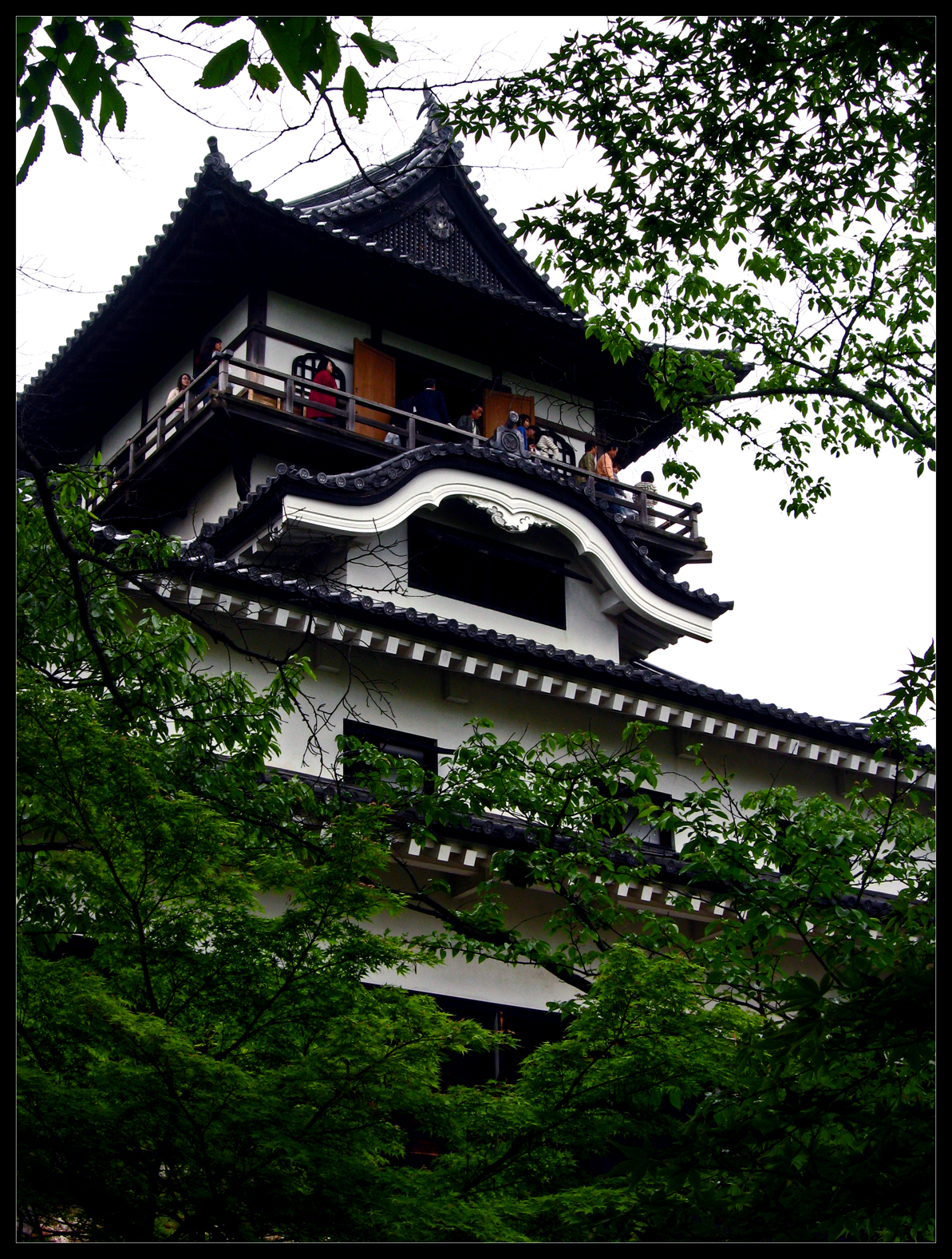
Inuyama Castle is considered one of the oldest remaining castles in Japan. Wikipedia says there are 12 that remain from before the Edo period, but the four most famous are Himeji, Matsumoto, Hikone and Inuyama. Out of these four, I had only been to Matsumoto Castle several times. You can find pictures browsing around my deviantArt account.

Inyuyama Castle is only a half hour from the nearest Meitetsu train station near my apartment. I've been in Gifu for almost two and a half years and I had yet to go, so I made it clear to my husband that we were going come rain or shine.

Well, it rained. Right when we got out of the station in Inuyama City.
And I forgot an umbrella.
But, being the crazy American tourists we are, we braved the 20 minute walk up to the castle without an umbrella!

Got there and being Golden Week there were more tourists than usual out on a rainy day. The walk up to the castle from Inuyama Station is nice because there's a whole area of old-style shops and galleries. I wish I had stopped to take pictures, but I wanted to get to the castle before it started pouring. There are also several oddly tall buildings along the walk. These hold the mikoshi for the Inuyama Matsuri and Inuyama Castle Matsuri that are held every spring in the beginning of April. Inuyama's mikoshi are quite taller than the normal mikoshi found at festival, and I believe are on wheels. I haven't actually seen them, so I'm not sure.


By the time we got to the castle it was starting to rain pretty good, so everyone was trying to get into the castle at the same time. Being an original castle with original flooring, one has to take off their shoes and put them in a plastic bag before entering.
This makes it quite dangerous to walk around the castle. The reason being, the stairs are insanely steep. To put it simply, castle builders made the staircases steep with narrow steps to keep invaders from rapidly climbing up the floors in the case they were invaded. I still wonder how samurai got around the castle in full armor during battle. There is no safe way to run up and down those stairs.

I will stop talking now and just let you guys look at the few pictures I have. All of these can be seen in larger on my deviantArt site which is linked up top. You can also download the full resolution photo from dA, but they aren't big enough to be wallpapers. If you would like a wallpaper from any photos you see on deviantArt, let me know and I'll see if I still have the original on file somewhere.


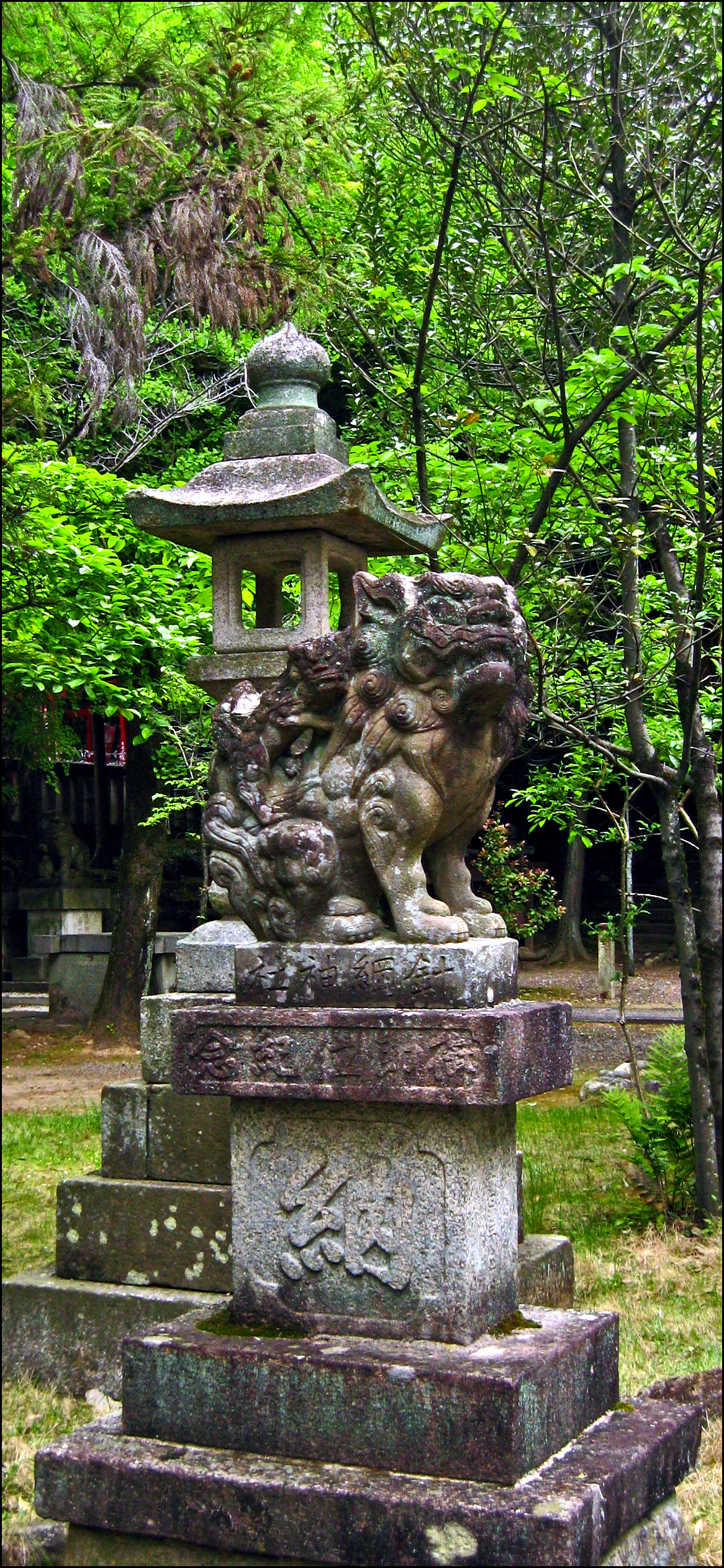
A protective statue at the shrine in front of Inuyama Castle. Usually they use foxes, but this shrine uses Chinese-style lions.


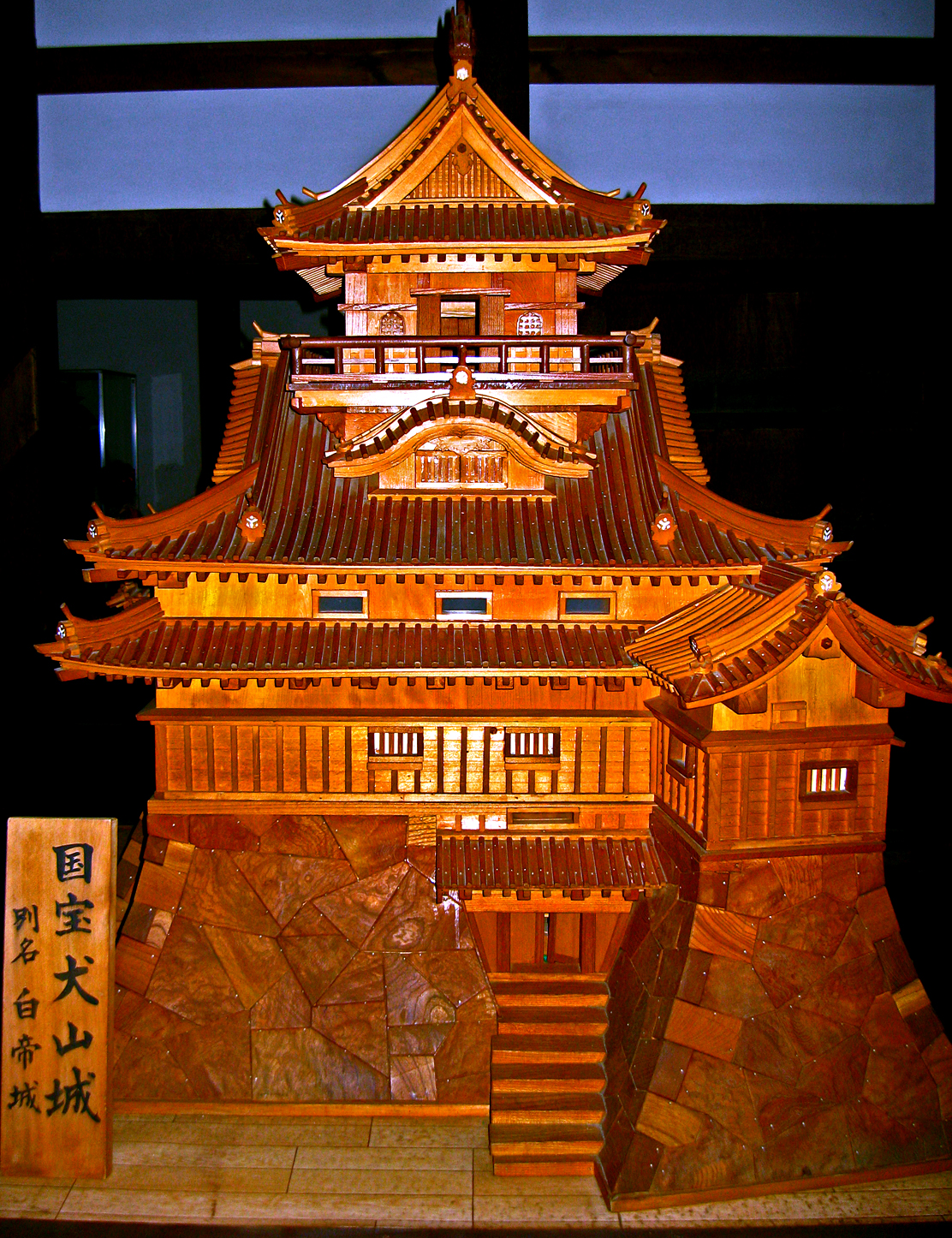
A scale model of Inuyama Castle found on the second or third floor. I forget which.


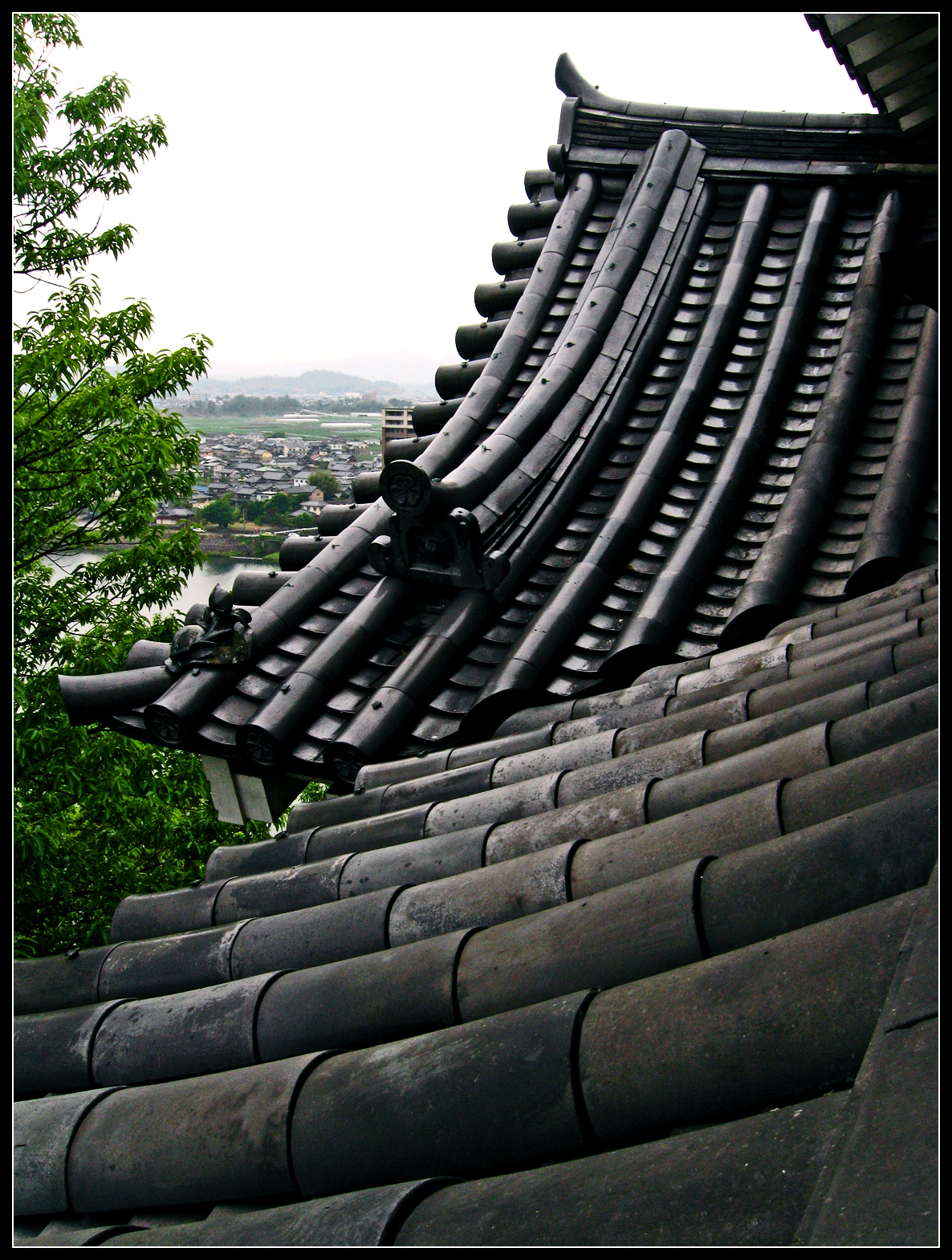
I love the roof tiles of old castle!


The Kiso River flows behind the castle. They do ukai fishing on this river as well, I believe.


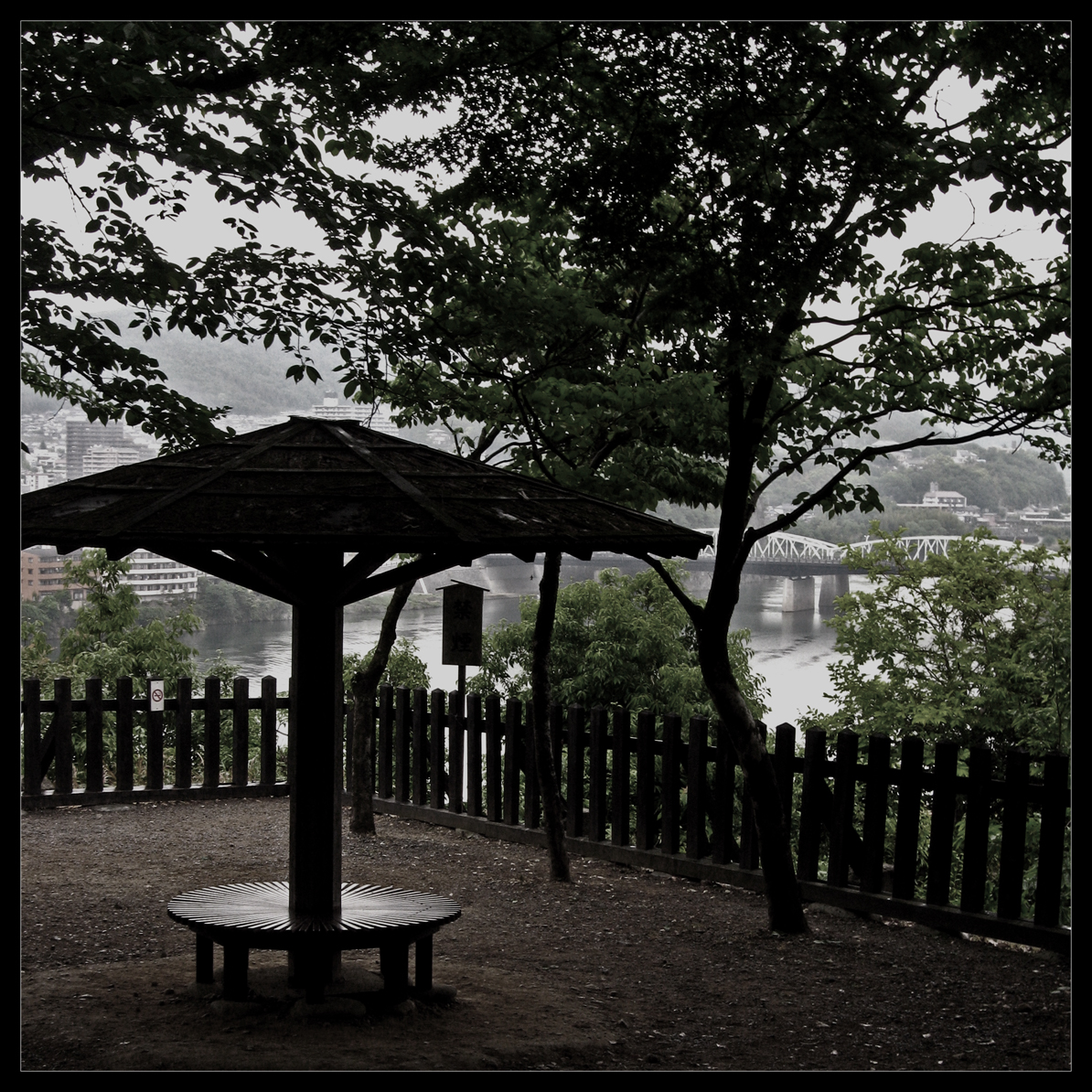
Nice little gazebo-thingie over on an old wall looking over the Kiso River.


Inuyama Castle!


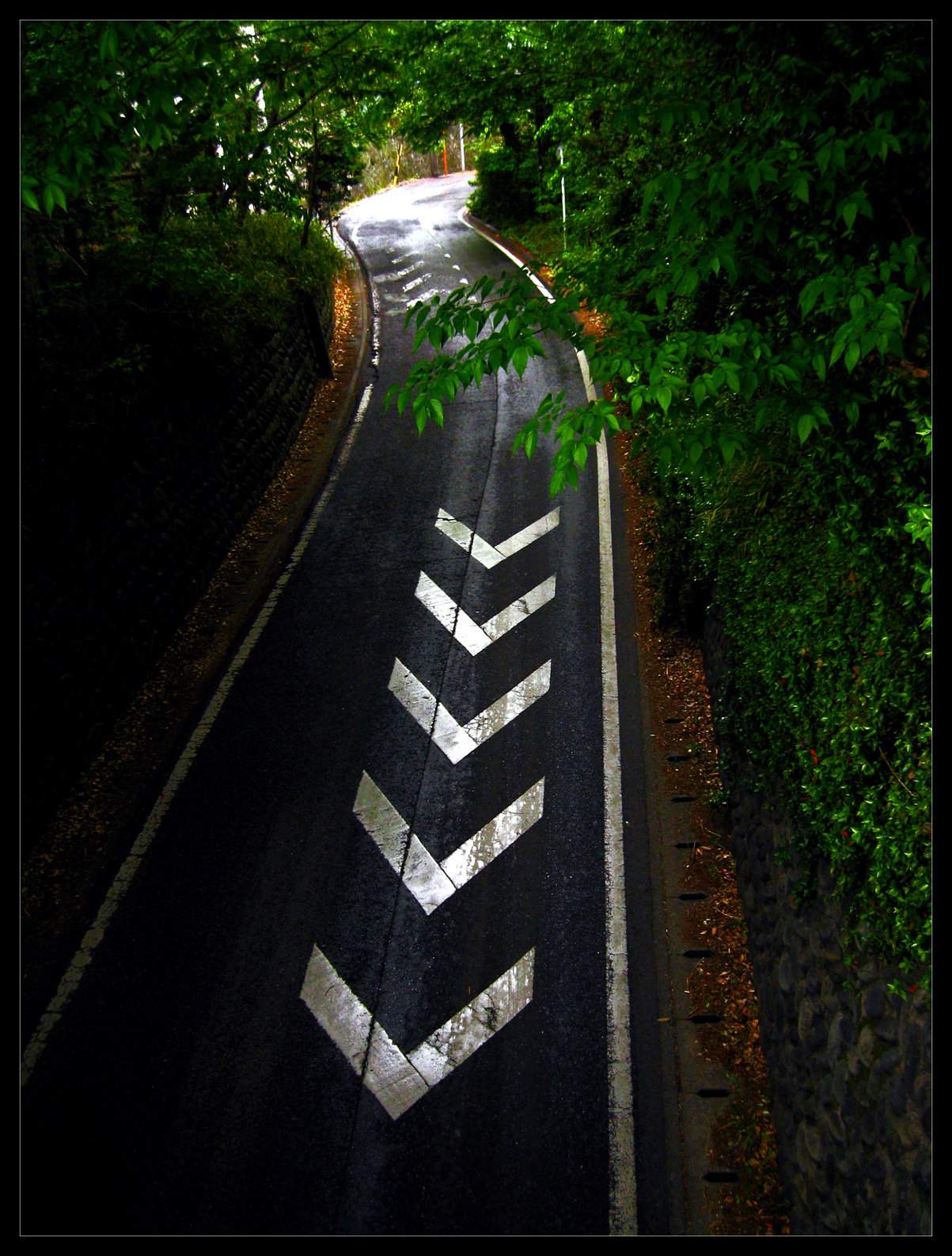
The roads surrounding the castle often go under footbridges, which leaves open great photo opportunities like this!

I think I'm starting to get into the swing of once-a-week posts on here. What I need to do now, it convince my boss to let me start doing this from home so I can post more things when I feel like it, not just went the office tries to schedule me in.

Anyway, today I'm going to take a break from the website reviews and write about something probably every other single blogger about Japan is blogging about.


Yesterday, on April 29th, Japan entered perhaps its most famous set of holidays, Golden Week.
If you haven't heard about it, Golden Week is a one-week period between April 29th and May 5th that houses four national holidays. Yes, four. These four are:

April 29th - Shouwa no Hi (昭和の日)
May 3rd - Kenpou Kinenbi (憲法記念日)
May 4th - Midori no Hi (みどりの日)
May 5th - Kodomo no Hi (こどもの日)

This year, because May 3rd falls on a Sunday, May 6th is a Furikae Kyuujitsu (振替休日), basically an observed holiday.


While April 30th through May 2nd are not technically holidays, many businesses will close to let their employees travel. The most common destinations are major tourist spots in Japan (Kyoto, Tokyo, Okinawa), returning to your hometown, South Pacific islands, the west coast of North America, and Europe.
During this week it is nearly impossible to find flights or vacant hotels without paying through the nose. Most bullet trains and super express trains are also completely booked way in advance. The few train cars on them that are not reserved seats are usually packed like a Tokyo subway car at rush hour: like a can of sardines.

Last year I was smart enough to stay at home and not really go anywhere. My husband hadn't been in Japan for even a month yet, so I didn't want him to be turned off of Japan by the mass exodus out of the city.
However, the year before I had a former student come visit me from the US for her high school senior project. We decided to rough it out and make a trek from Gifu up to Nagano City. Oh man, was that a mistake.
The train from Gifu to Nagoya wasn't all that bad, but the 4-hour express train from Nagoya to Nagano was standing-room only in the non-reserved cars. We ended up shoving our bags into the luggage racks at the one end of a car, and sat in there for the 4 hours. The weather was quite warm as well, so the train cars, despite being air conditioned, were still quite stuffy due to the fact that everyone who got on the train was sweating from standing out in the heat on the platforms.

I know now, because of that trek, that if I am going to travel during Golden Week, I better make plans and reservations about 6 months in advanced. Well, maybe 2 months at the least....


Now, I can't find anything to back this up, but I once heard on a TV show here that the name Golden Week was originally created by travel companies and movie theaters. Basically, the long row of holidays created a surge in people going on trips and going out to movie theaters, so the PR guys for the travel companies and movie theaters decide it was a "golden" opportunity to get some business going. As such, the week was labeled "Golden Week" as not only a "golden" time to go spend time with your family in an exotic location or at the movies, but also a "golden" time to make a lot of money.
Whether this is actually true or not, I don't know. However, I do know that because of so many travel deals that are marketed for this week, many employees started taking off the whole week to travel, and eventually many businesses started shutting down for the week as well.
Even though I have class and a meeting tomorrow (out of all the teachers, I'm the only one with a class), our office is technically closed from the 1st through the 6th for Golden Week. A friend of mine is coming back home for the first time since New Year's, as Golden Week is one of only three long holidays his company in Tochigi gives him (the others being New Year's and Obon in August).


Anyway, I figure it's probably a good "work thing" if I go into a bit of detail on the holidays that make up Golden Week. While it's all easy to Wikipedia and all, at least it'll all be on the same page on my blog!


Originally, April 29th was only celebrated as the birthday of Emperor Hirohito (posthumously called Emperor Shouwa). However, upon his death, the day was made into a national holiday called Greenery Day (Midori no Hi みどりの日). This name was chosen to represent the Emperor's love of plant without specifically naming him, basically just to keep scandals away.

Wait? Midori no Hi? Didn't I type that up as being May 4th?
Well, after the Emperor's death, Japan was all afraid that there would be huge scandals and controversy and such, and decided not to name it directly after him. But, starting in about 2000, several attempts to change the name of the holiday were brought to the Japanese Diet and finally in 2005 one of them passed. Starting in 2007, the name of the day was officially changed to Shouwa no Hi.


May 3rd, Kenpou Kinenbi, is an easy day to explain. Literally, it's Constitution Memorial Day. May 3rd, 1945 was the date that the new Japanese Constitution was put into effect. Japan likes to make holidays, so they commemorated the turning of a new page in Japanese history by making May 3rd a national holiday. Many news outlets use this day to talk about democracy and bring up issues in the constitution that are constantly being battled about in the Diet, mainly the issues of Article 9 (no offensive military, just defensive), and whether or not the royal line can be passed down to a princess.
The common man, however, just sees it as a day off. Nothing more, and no one really cares it seems. They're all too busy drinking fruity cocktails out of coconuts in the South Pacific.


May 4th, the current Greenery Day, was originally just a "day of rest" between two national holidays. Japan didn't like the fact that there was a holiday on the 3rd, a day of work on the 4th, then another holiday on the 5th, so someone got the bright idea to make the 4th a holiday as well and just give everyone three days off in a row.

Whoever came up with that idea, thank you. You deserve a medal.

Once April 29th was renamed to Shouwa no Hi, Greenery Day got moved to the 4th to make it an official holiday. Much rejoicing was had with, once again, fruity cocktail-filled coconuts.


May 5th is probably the most well-known and celebrated of all the holidays in Golden Week.
Originally called Tango no Sekku (端午の節句), it marked the beginning of the summer rainy season on the 5th day of the 5th lunar month. (Which is total news to me. I'm learning this right along with you guys!)
This day was also used to celebrate the health and prosperity of boys born into families by the hanging of carp banners, and displaying a set of armor and arrows in the home. Some houses only display the kabuto helmet of the armor set, but there are immaculate, full-armor sets in some older homes. One of the kindergartens I teach at has a full-set from the Heian Era (794-1185).
The banners, koinobori, are kinda neat. One day I will post pictures of the set Gifu Kindergarten made last year in an event we helped out at. Basically, the banners are a family of carp: a large black one for the father, a slightly smaller red one for the mother or eldest born (depends on who you ask, it seems), and then smaller blue, green and purple carps for each subsequent son. They're pretty much giant windsocks, and are usually on a pole that has a spinny-thing on top followed by streamers.
Carps were picked because of a Chinese legend about carp becoming a dragon if they swam upstream, but you don't really hear anyone mention that anymore. There are a few songs about the carp banners and the day in general, but once again, I've never actually heard them.
On the largest, black carp, you will usually see a half-naked, red-skinned child hanging on for dear life. This is Kintarou, a character in Japanese history/myths that was known for his strength as a child. Supposedly he played around with wild animals and rode on the back of a bear, not a horse. Not sure why he's on the carp and not a bear, but I have a feeling it's to wish that the sons born into that family become strong like Kintarou was as a child. If I can find out anything more on why Kintarou is on the carp, I'll be sure to add it in. On the same note, if you know why Kintarou is on the carp, please leave a comment!

There's some controversy over Kodomo no Hi, mainly as it has traditionally be considered "Boy's Day". Though the name has changed to "Children's Day" to celebrate all children, it still focuses mainly on boys, while Girl's Day (Hinamatsuri) on March 3rd is not a national holiday. Many feminists and women's rights people have gotten their panties in a twist over this fact, but nothing has changed still. I think it would be awesome if Girl's Day became a national holiday. One more day off for me!


Once again, this blog has gone on way too long.
I need to stop writing walls-of-text. Maybe then some of you would stick around to read the whole thing.

I may or may not post from home during the holidays. Currently we have no plans to go anywhere except karaoke with my friend coming home from Tochigi. If we feel up to it, we may venture over to Inuyama Castle for a day. If we do, expect a photo post.